
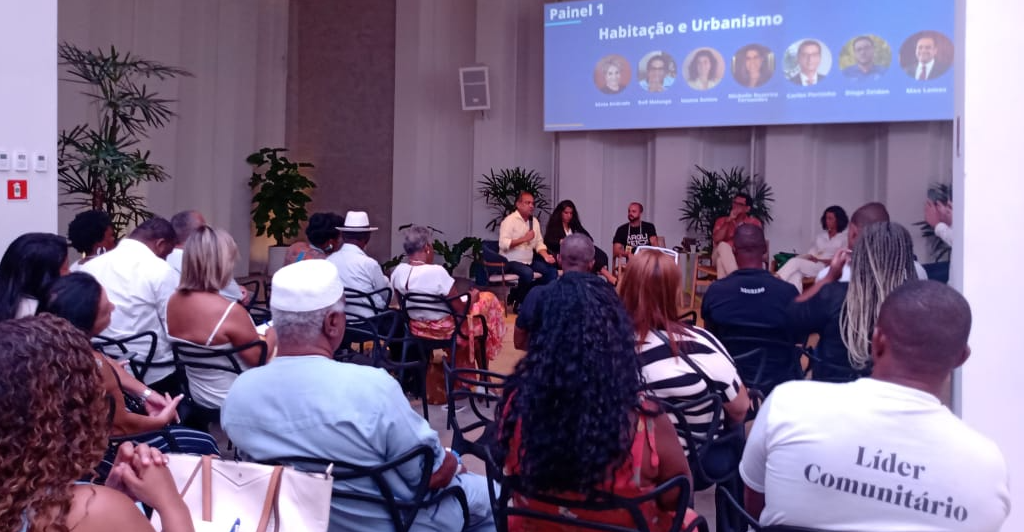

On January 30, the Rio de Janeiro Municipal Federation of Favelas (FAF-RIO), in partnership with Instituto 12, Ọ̀yọ́ Cultural, and Cetbras, held the first edition of the FAF-RIO seminar entitled “Dialogues on Housing, Urban Planning, Environment, Culture, and Entrepreneurship,” dedicated to discussing the challenges and potential of the city’s favelas. The event took place at the Instituto 12 headquarters, located in Leblon, in Rio’s high-end South Zone, and was attended by 100 people, including the general public, public authorities, favela leaders and collectives, and professionals from the fields of housing, urban planning, environment, culture, and entrepreneurship. The initiative aimed to foster a closer dialogue between authorities, strategic sectors and grassroots movements, bringing discussions of interest to favelas into one of the South Zone’s most affluent neighborhoods.
Paths to Coexistence: Housing and the Urban Environment

The seminar sparked reflections on different forms of social disparity and how favelas both reflect and subvert them. According to architect and FAF-RIO’s Director of Architecture and Urban Planning, Fernando Pereira, who is responsible for the Favela Architects project, any urban planning initiative must focus on human beings, beyond infrastructure.
“When a family doesn’t even know how they’re going to eat next month or buy cooking gas—how are they supposed to afford an urbanist/architect? I believe [urban design in the favelas] is a way to provide dignity. We need to think of ways to bring dignity to favelas, and architecture is one of them. That is, if the professional architect is a good listener. A project can’t come ready-made; it has to be built collectively, and only then will it have a positive impact on people’s lives.” — Fernando Pereira
Marcello Deodoro, president of the Indiana Community Residents’ Commission—a collective responsible for various initiatives, including environmental restoration in the Indiana favela in Greater Tijuca, in the North Zone of the city—highlighted the need for collective organizing regarding environmental care in the urban context.
“We live in a city, but at the same time, some areas are cut by rivers that are remnants of the Atlantic Forest. We need to learn how to coexist—we can’t ignore that this is part of our reality. We are also part of the environment. The favela is located within the Atlantic Forest, but you can also see paved roads and wealthy people living there. We need to understand that nature itself has limits when it comes to human intervention.” — Marcello Deodoro
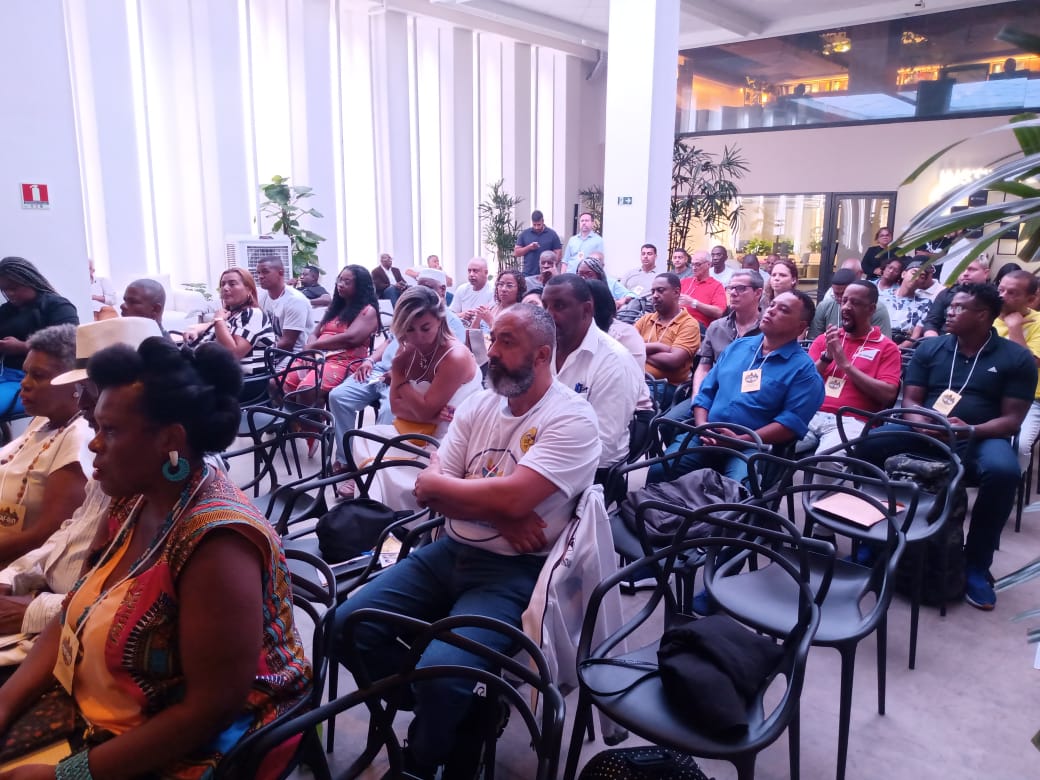
Also from the Indiana community, Ruth Sales, a member of the Black Women from Favelas movement, pointed out how racism hinders the development of residents.
“Did anyone choose to live in a favela? No one does—it’s historical. For the most part, it’s our Black people living in favelas, without humane living conditions. It’s historical. We have a history. We were enslaved, and that’s why we’re [living] in this place—a place where anything goes [including all kinds of violence and social issues]. Where we are constantly surviving, not living, where a bullet can find us at any moment. We can fall ill and not have the right to healthcare, not be treated. Life in the favela is very hard. It’s a social challenge we face every day.” — Ruth Sales (Black Women from Favelas)
Entrepreneurship, Culture, and Successful Favela Initiatives
From the perspective of Afro-entrepreneur and psychologist Quênia Alleluia Okaunhola, the event represents an opportunity in a moment of political change, fostering closer ties between public authorities and society. She points out, however, that favelas still need to fight to achieve their demands.
“Today is the first time [for us, speaking in this space] because now there’s an interest in listening to us, even if they already have something ready to hand over. But at least today, I can speak about what my community needs—what we want, what will be good for us. Sometimes they want to pave roads, and that’s not what we want. We have to speak up, we have to fight, we have to make our voices heard. We have to show that we have desires, that there are things we want, things that are important to us. We can’t accept having a square built at the entrance to our community just so that people passing by can say, ‘Wow, what a beautiful square,’ and feel less guilty.” — Quênia Alleluia Okaunhola
Márcia Souza, one of the founders of the Favela Museum in the Pavão-Pavãozinho/Cantagalo favelas, emphasizes how important it is for participants to make their presence felt in an elite neighborhood like Leblon.
“It’s very important for us to be in this space. We’re in the South Zone, in the area with the most expensive square meter [of real estate] in the city. We’re in Leblon, a place we normally wouldn’t have access to as favela residents. And it’s very important to talk about our struggles and our achievements to people from the favelas as well—not just to politicians and businesspeople, but to people from the favelas who act on behalf of their favelas. Movements often end up being very isolated, so when there’s an opportunity to bring everyone together and share what we’re doing, that’s very important to me. A successful project is one that keeps bringing in new people.” — Márcia Souza
Elma Alleluia, president of the Alzira Alleluia Vocational Training Center in the favela of Vidigal, was one of the leaders who presented the outcomes of her local initiatives. Above all, however, she left a profound reflection on what she considers success for the participants of FAF-RIO’s first seminar.
“It’s very important for us to be in these spaces, in these territories, so we can bring knowledge and opportunity. Success is the expression of what we’ve done, thought, and implemented. And then we share it with others so they can have the courage and boldness to pursue success.” — Elma Alleluia
Also present at the event were: Carlos Portinho, senator and Secretary of Housing for the state of Rio de Janeiro; Iazana Guizzo, Ph.D. in Architecture/Urbanism; Michelle Beatrice, vice president of the Council of Architecture and Urbanism-Rio de Janeiro Chapter (CAU-RJ); Max Lemos, president of the Parliamentary Front for Favelas; Vitor Hugo, city councilor; Ivanir dos Santos, babalawo—a high priest in the Afro-Brazilian Candomblé religion, Ph.D. in Comparative History, and professor; Reginaldo Lima, from Investe Favela, an investor and business accelerator for entrepreneurs from favelas and peripheral areas; Karen Andrade, entrepreneur from the favelas of Complexo do Alemão; Ana Maria Espírito Santo, artisan and craft instructor; Lupper Concepção, music teacher and former Deputy Secretary of Culture of Maricá; Eliza Ramos, photojournalist; and Júlio César da Silva, president of the National Foundation for Children’s and Youth Literature.
About the author: Amanda Baroni Lopes is a journalism student at Unicarioca and was part of the first Journalism Laboratory organized by Maré’s community newspaper Maré de Notícias. She is the author of the Anti-Harassment Guide on Breaking, a handbook that explains what is and isn’t harassment to the Hip Hop audience and provides guidance on what to do in these situations. Lopes is from Morro do Timbau and currently lives in Vila do João, both favelas within the larger Maré favela complex.